
JPIII: Embryonics Administration

^ View from a higher elevation of the Embryonics Administration and Labs. The labs are confined to this valley, and based on this the survivors would approach the entrance from the left.
Embryonics Administration is where dinosaurs were cloned, hatched, studied, and eventually observed in the incubation, testing, and dinosaur kennel areas before going to points unknown. Arranged like a factory floor setting the Embryonics Administration gives the appearance of being akin to an assembly line for InGen’s dinosaurs for the Jurassic Park pedia.

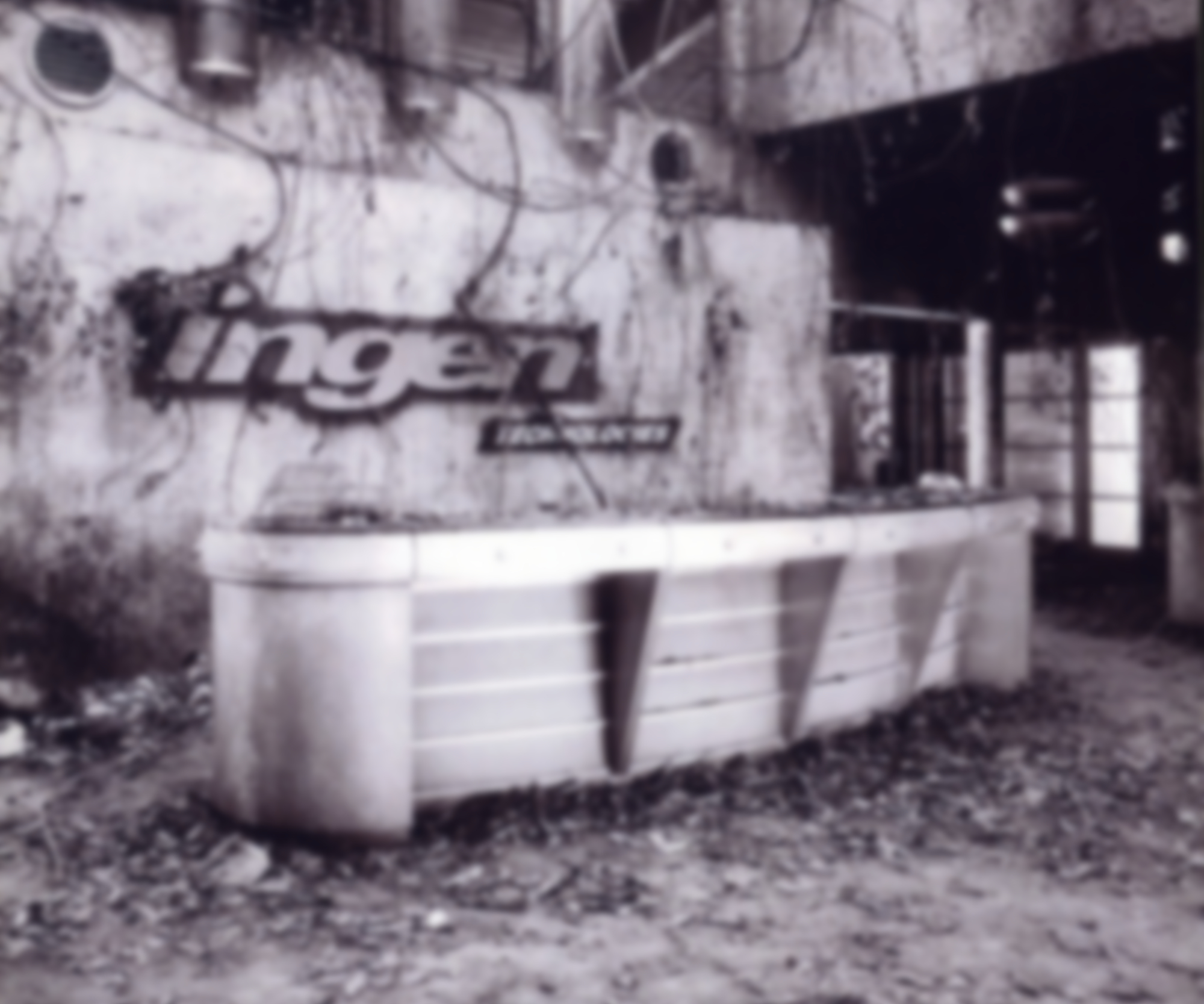
The entrance to the main facility can be found at the Embryonics Administration facility. Preceded by a heavily overgrown parking lot that contained the battered hulks of vehicles once utilized by InGen on the island, the landscaping around the front has been heavily overgrown after eight years of lacking human maintenance. The ferns that had adorned the now mold and vine encrusted InGen sign that was the centerpiece to the parking lot have grown wild, and the shrubbery that lined the front of the building now threatens to spill over it’s placement.

Once inside the lobby, behind the desk was the InGen technologies logo, vines slowly creeping over it. Holes in the roof above had allowed puddles of water into the room, and vines hung from the ceiling of of the room. Beyond this was a hallway that, presumably, led to other unseen areas of the Embryonics Administration center. This hallway also leads to the production facility, where the dinosaurs were produced.

A long, 3-story, rectangular structure served as the factory floor to the entire operation. The entire floor held a long parallel row of incubators, each holding nine eggs. These incubators were intersected by numerous gigantic, robotic arms that hung from the ceiling on a track, their exact function and how they operated can be only speculated. The incubators were flanked on the outside by rows of embryonic tubes, where InGen could visually watch the progression of the growth of their dinos, and where they could spot deformities that allowed for them to perfect their cloning process.

The entire ground level could be watched over by a pair of catwalks that intersected at various points over the floor. By 2001, the entire floor had been layered in a a thick covering of dust, and the robotic arms were stalled and rusted. Some dinosaur eggs had fallen to the floor to lye with the leaves that cluttered there. The water inside embryonic tubes had turned green from the lack of proper oxygen flow, and any dinosaur embryos that had been inside have rotted. Some tubes had been broken open, and their contents now empty.
